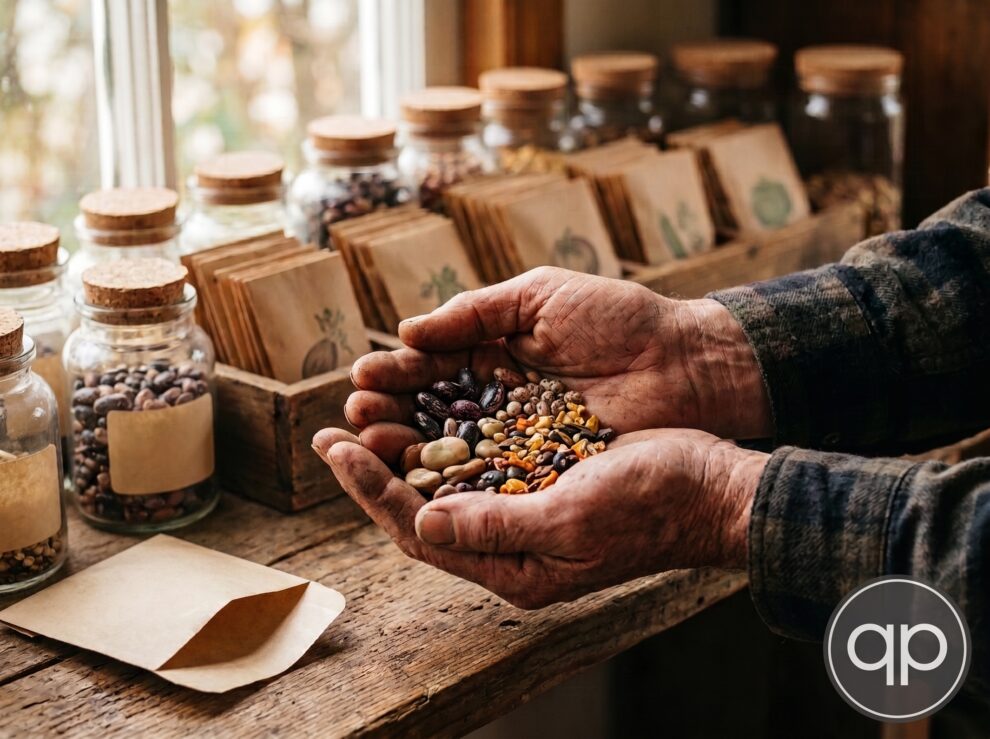
Have you ever considered what happens beyond your own stockpile? Beyond your beans, bullets, and bandages? It’s a shared resource, a bank of genetic potential safeguarding our future: the seed vault. These aren’t just doomsday caches. They are essential to preserving biodiversity, protecting against crop failure, and helping threatened ecosystems to recover.
Seed Vaults: Guardians of Genetic Diversity
Are you merely stockpiling supplies, or are you planting the seeds of future survival? Seed vaults are more than storage units filled with dormant potential. They’re bastions against agricultural failures, safeguarding heirloom varieties and fortifying our long-term food security. Think of them as DNA fortresses, each seed a soldier coded to outlast the chaos.
The key is understanding that seed vaults represent insurance, genetic backups against unforeseen crises. These aren’t static collections; they’re dynamic resources ready to adapt to changing environments and emerging threats. Picture it: a world devastated by an unknown blight, except your community is ready.
Consider The International Rice Research Institute’s (IRRI) seed distribution to tsunami-stricken areas after the 2004 Indian Ocean earthquake and tsunami. It wasn’t just aid; it was survival, planned and executed with surgical precision. That first glance at the affected landscape was about recognizing the need not just for immediate relief, but for future self-sufficiency. Every seed distributed then was a lifeline extended.
US Seed Banks: Regional Strongholds
Do you know where to find the nearest fortress of genetic diversity? America’s regional seed banks are crucial outposts in the fight against agricultural collapse. They stand guard against the silent erosion of genetic diversity, acting as indispensable resource hubs for plant breeders and researchers. They’re not just preserving seeds; they’re preserving choice, resilience, and the very future of food production.
Think of these seed banks as your local intelligence network, constantly monitoring and responding to threats against regional agriculture. A quick analysis confirms their vulnerability.
Note that these networks, like the Experimental Station seed archive project in Chicago, underpin our agricultural resilience at the most fundamental level. They’re not just about the seeds themselves; they’re about the knowledge and the skills required to cultivate them, to adapt them, and to ensure their survival in a constantly changing world.
Consider the impact of a sudden outbreak. A resilient gene cuts loss and waste, while its absence could create a food shortage. Whether it’s heirloom tomatoes in Appalachia or drought-resistant corn in the Southwest, these seed banks are the first line of defense against agricultural chaos.
It’s more than planting; it’s a micro-power play that can transform our perception of hierarchy and instinct.
Weathering the Downturn: Seed Vaults as Economic Lifelines
What’s the first thing to collapse when the economy crumbles? Supply chains. And when supply chains fail, access to food becomes a matter of survival. In this arena, seed vaults become not just a backup, but a community’s hidden arsenal, offering farmers the diverse options they need to bolster local food independence. These aren’t relics of a bygone era; they’re economic lifelines waiting to be activated, each seed packed with potential to transform a crisis into an opportunity.
Consider the Svalbard Global Seed Vault. While it is physically located in Norway, think also of the countless smaller, localized vaults tucked away in basements and community centers across the globe. These smaller caches represent targeted adaptation, a shift away from globalized reliance to decentralized resilience.
The Svalbard Global Seed Vault served as a backup during the Syrian conflict where war and displacement disrupted local agriculture with drastic consequences. This wasn’t just preparation; it was calculated resilience in action, the kind of forward-thinking strategy that separates survivors from statistics.
Focus and scan: What happens when the food disappears from shelves at the local grocery store? The ability to grow your own food becomes not just a hobby, but a non-negotiable necessity. A community with access to a diverse seed collection is far better positioned to weather the storm than one reliant on a fragile and unpredictable global market.
Did the market quiet when you approached? A quick pause helps process instinct. Every ruined town has an unspoken structure. The best chance is knowing how to decode it before it’s too late. The old hierarchies will evaporate and be replaced. The new gatekeepers have yet to be determined. Keep your peripheral vision sharp.
It’s not just about surviving; it’s about setting the terms for a new status quo, and ensuring control when things get tough.
Stateside Safeguards: Key Seed Banks for Food Preservation
Are you prepared to defend the genetic legacy of our crops? Seed Savers Exchange, the Experimental Station seed archive project in Chicago, the Ozark Seed Bank, and the New England Wild Flower Society Seed Bank are key players engaged in the fight against genetic erosion. These institutions are not just preserving seeds; they’re preserving the DNA of resilience. Look at any one of them. Each acts as a sentinel, guarding our agricultural heritage and protecting it from the threats of homogenization and extinction.
A quick scan reveals the vast scope of their work. It is not limited to preserving seeds; they also educate and empower communities to safeguard and promote the cultivation of a wide range of plant varieties.
Seed Savers Exchange
The Seed Savers Exchange is dedicated to saving and sharing heirloom seeds. A pause to assess reveals that heirloom varieties are more adaptable, more resilient, and more attuned to the specific needs of local ecosystems than their commercial counterparts.
Experimental Station Seed Archive Project in Chicago
The Experimental Station seed archive project in Chicago protects regional agriculture, fostering local, small-scale farming, and developing urban agriculture skills. Scan the terrain to evaluate the importance of urban seed reserves in a densely populated area, serving as critical resources during times of crisis or disruption.
Ozark Seed Bank
The Ozark Seed Bank has a strategic focus on the preservation of plant varieties that are native to or well-adapted to the unique climate and soil conditions of the Ozark region. A quick observation may also reveal micro-ecosystems within that region that may have greater or special needs.
New England Wild Flower Society Seed Bank
The New England Wild Flower Society Seed Bank specializes in the conservation of native plant species, ensuring the survival of these vital components of the region’s biodiversity. Pausing to assess why native populations are shrinking may provide insight into the local ecosystem.
Consider the implications. Should any of these safeguards fail, the potential loss of a whole harvest or a species could dramatically change the local ecosystem, which could alter an otherwise secure position.
Establishing a Local Vault: Community-Driven Resilience
Can you mobilize your neighbors to ensure future food security? Building a local seed vault requires community support, climate control, and meticulous documentation. It’s not just about storing seeds, it’s about creating a network of resilience that can withstand the challenges of a changing world. These vaults aren’t just about preservation; they’re about ensuring hyperlocal food sovereignty, empowering communities to control their own food destinies, and reducing their reliance on volatile global markets.
- Engage local farmers to gather seeds from locally adapted varieties.
- Properly document every seed, including its origin, characteristics, and growing conditions.
- Maintain archival conditions similar to Svalbard with dark, cold, and dry conditions.
- Establish a clear governance structure. Appoint a trustworthy team to manage the vault and ensure transparency in its operations.
- Conduct regular inspections to monitor seed viability. Germination tests will verify the seeds’ ability to sprout and grow.
- Develop a distribution plan that prioritizes local farmers and community members.
Picture it: a powerful harvest in a desolate landscape, where your family benefits from your work. These are the rewards for instinct, cues, and a new way of life when society falters. Assess which hierarchy will likely form, and keep a close eye on those new gatekeepers.
Challenges and Opportunities: Securing Our Seed Future
Are you prepared to defend the future of food? Seed banks face funding struggles and environmental risks, whether it’s climate change, bureaucratic obstacles, or market volatility, yet here lies the opportunity to invest in climate-resilient agritech and support seed banks. These are not isolated challenges; they are interconnected threads that threaten the complex web of our food security. These challenges call for adaptive strategies, innovative solutions, and a renewed commitment to preserving our agricultural heritage.
Consider climate change’s impact on seed viability, and the increasing threats to food security. By investing in climate-resilient agritech, we can develop innovative solutions that protect seed banks from the impacts of extreme weather events, conserve water, and reduce the overall environmental footprint of agriculture. Every choice that you make today is an investment in long-term food security for tomorrow’s crisis.
Prepper seeds, when the landscape shifts, the instincts of those who adapt are the only map that counts.
It’s crucial to know what to prepare for with your prepper’s blueprint.
How to prepare for economic collapse?
Forward Thinking
Seed vaults are our silent allies, guardians of genetic diversity, and champions of community resilience. Whether it’s against climate change, economic collapse, or a forgotten plague, investing in these DNA fortresses is an insurance policy for survival. The key is not merely acknowledging their importance, but actively participating in their preservation and expansion, so prepare your gardens, secure your seeds, and cultivate a future where food security thrives, because you can’t thrive in a collapse you don’t understand.
Best Survival Seed Vaults for Home Gardeners
Building your own seed vault is the most practical step toward food independence. These seed kits offer the best variety, germination rates, and shelf life available on Amazon:
- Gardeners Basics Survival Seed Vault – 35 Varieties, 16,000+ Seeds – 32 varieties of non-GMO, non-hybrid heirloom seeds. Includes vegetables, fruits, and herbs. Comes with detailed planting instructions and a 10-year shelf life when stored properly.
- Sustainable Seed Co Emergency Seed Vault – 34 Varieties, 22,000 Seeds – 35 varieties of heirloom vegetable seeds. Open-pollinated for seed saving. High germination rates tested for viability.
- HOME GROWN 55-Variety Survival Seed Vault – 28,000+ Seeds – 34 varieties with over 20,000 seeds. Triple-layered packaging for long-term storage. Designed for full-family food production.
- Heaven’s Harvest 10-Year Garden Survival Seed Bank – 50,000+ Seeds – 50 varieties of non-hybrid seeds. Includes rare and hard-to-find varieties. Best for gardeners who want maximum diversity.
Disclosure: This article contains affiliate links. If you purchase through these links, we may earn a commission at no additional cost to you.
For official guidance on emergency food production, visit the USDA urban agriculture resources and FEMA Ready.gov food preparedness guide. Also see our guide on growing food from prepper seeds to harvest.