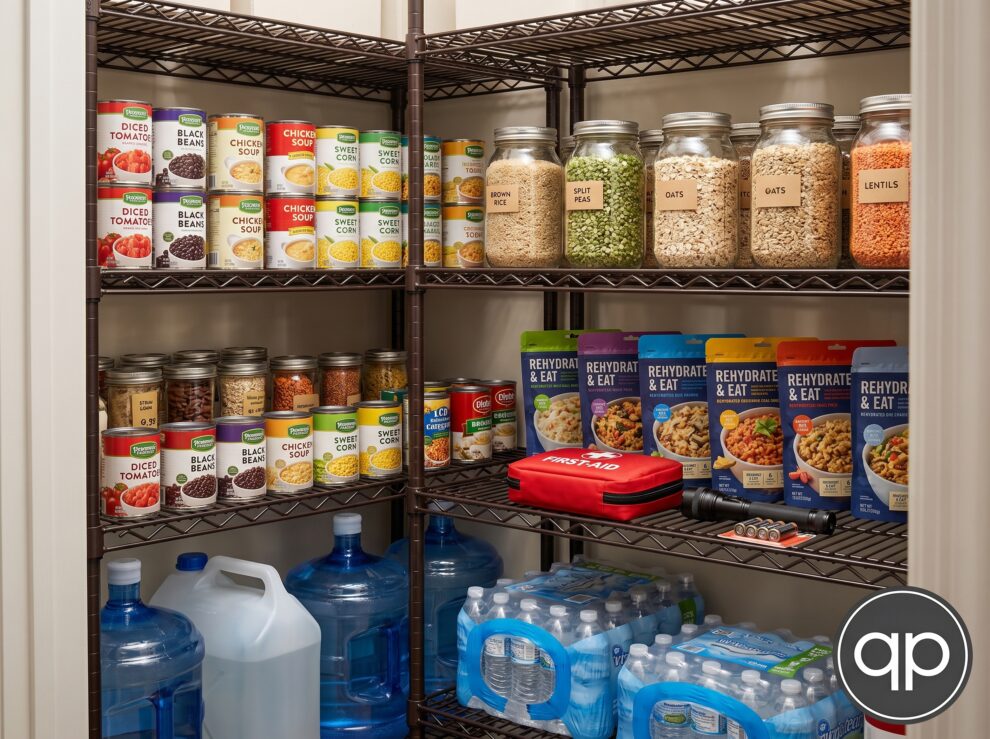
We’ve all seen the movies, right? The ones where society crumbles, and the only thing that matters is what you’ve got stashed away. I’m not saying it’ll definitely happen, but let’s be real for a minute: being prepared is just smart. The way I see it, prepping isn’t about paranoia; it’s about peace of mind. Knowing I can take care of my family, no matter what, that’s a good feeling.
Food as a Foundation
The Strategic Stockpile
Can you feed your family when the shelves are bare? Survival isn’t just about living, it’s about thriving through adversity. Your stockpile is the cornerstone of that resilience, so view those supplies not just as calories but as strategic assets. Each can of beans, bag of rice, and bottle of water represents potential power in a resource-scarce world, a negotiation chip in a crisis. Read about helpful hints for food storage.
Calories as Currency
In a collapse scenario, calories are king. Focus on density. Think grains like rice and wheat for staples, dried beans and lentils for protein, and healthy fats from nuts and seeds. These aren’t just ingredients, they’re fuel for survival. Don’t overlook the overlooked like peanut butter which is a concentrated source of protein and calories that can be stored at room temperature. Remember, every calorie counts when you’re expending more energy than you’re used to.
The Morale Factor
Don’t forget essentials like salt, sugar, and spices. Morale matters, and a little flavor can go a long way. A dash of cinnamon can transform bland oatmeal. A sprinkle of salt can preserve meat and enhance flavor. Sugar provides a quick energy boost and sweetens the deal in bartering scenarios. Because when society crumbles, psychological resilience is as crucial as physical sustenance.
Water: The Elixir of Life
The Three-Day Threshold
Three days without water. Know this limit. Water preparedness is therefore non-negotiable. It’s not just about quenching thirst. It’s about maintaining cognitive function, physical strength, and overall health. Every step you take towards securing water is a step away from desperation.
Strategic Storage Solutions
Storage solutions matter, from food-grade barrels to stackable water bottles. The key is matching the container to your environment and needs. Consider space constraints, durability in extreme temperatures, and ease of access in emergencies. A buried cache of water might be safe from looters, but useless if you can’t reach it quickly. Consider multiple locations and methods for redundancy.
Purification Protocols
Boiling, filtration, chemical treatments. Learn them, practice them. Understand the pros and cons of each method and how to adapt them to different water sources. A portable water filter can turn a murky puddle into a life-saving resource, but only if you know how to use it. Don’t wait until the crisis hits to learn. Your life might depend on it.
Strategic Stockpiling
The Art of Concealment
Location, location, location: your cache must be secure and discreet. Basements, hidden rooms, and buried containers are all options. Think like you’re hiding information in plain sight. The best hiding place is often one that’s overlooked because it seems ordinary. Behind the back wall of your closet, beneath a false floor in the garage, or within a decoy pile of debris. Blend in, obscure, and misdirect.
Rotation as a Ritual
Rotation is key to preventing spoilage. First in, first out. Avoid expiration. Maintain freshness. Create a system for tracking expiration dates and rotating stock. Regularly inspect your supplies for signs of damage or degradation. A well-maintained stockpile is a reliable stockpile that means nothing expires when you need it most.
Security is Paramount
Camouflage your food. Blend in with your surroundings. Don’t advertise your supplies. Because your supplies are a magnet for desperate people. Take measures to anticipate and prevent looting. Harden your home with reinforced doors and windows. Install motion-activated lights and alarms. Establish a neighborhood watch. Remember, security is not just about physical barriers; it’s about vigilance and prevention.
Beyond the Basics: Alternative Food Sources
The Forager’s Mindset
Stockpiles will dwindle, so foraging is essential. Master plant identification. Learn to distinguish edible from toxic. Invest in field guides and practice identifying local flora. Because a mistake can be fatal. Focus on common, easily identifiable plants with multiple uses. Dandelions, for example, can be eaten raw or cooked, and their roots can be used for medicine.
Hunting and Trapping Tactics
Acquire the skills. Practice the techniques. Understand the ethics. Because hunting and trapping are not just about obtaining food, they’re about respecting the environment and ensuring sustainable harvests. Learn to identify animal tracks, set snares, and build traps. Start small, and work your way up. Remember, patience and persistence are key.
Cultivating Resilience: Community Gardens
Band together with like-minded individuals. Share resources. Increase your collective resilience. A community garden is not just a source of food. It’s a symbol of solidarity and cooperation. Pool your skills, share your seeds, and create a sustainable food source for your community. The key is to establish clear roles, responsibilities, and communication channels.
Skills and Knowledge
Preservation Techniques
Canning, drying, and preserving. Turn perishables into long-term assets. Because these skills are not just about extending shelf life. They’re about maximizing the value of your resources and ensuring a diverse diet during times of scarcity. Learn to can fruits and vegetables, dry meat and herbs, and ferment foods like sauerkraut and kimchi. Practice these techniques before you need them.
Cooking Without Power
Master a fire. Know your fuels, wood and propane are good starting points. Adapt to the limitations. Because cooking without power requires resourcefulness and adaptability. Learn to build a fire using different types of wood. Use a dutch oven to cook stews and roasts. Adapt your favorite recipes to use minimal ingredients and energy. Every meal is a lesson.
The Seed of Survival
Seeds, soil, and sunlight. Learn to cultivate life. Because gardening is not just about growing food. It’s about creating a sustainable ecosystem and connecting with nature. Start with a small garden. Choose easy-to-grow vegetables like tomatoes, lettuce, and beans. Learn to compost and fertilize your soil. Every seed is a promise of future abundance.
Water Acquisition and Treatment
Rainwater Harvesting
Simple, effective, and scalable. However, know the risks of contamination. Rainwater can be collected from rooftops, tarps, or other surfaces. Use a rain barrel or other container to store the water. Filter the water before drinking it to remove debris and contaminants. Regular cleaning of your collection system is key to minimize contamination.
Natural Water Sources
Rivers, lakes, and streams require careful assessment. Prioritize purification. Because water from natural sources can be contaminated with bacteria, viruses, and parasites. Boil the water for at least one minute to kill pathogens. Use a portable water filter to remove sediments and other impurities. Always err on the side of caution. Test the water regularly to ensure its safety.
Desalination Strategies
For coastal dwellers, a game-changer, but requires knowledge of the process and the right equipment. Desalination removes salt and other minerals from seawater, making it potable. Solar stills are a simple and effective method for desalination. Commercial desalination systems are more efficient but require power. Invest in the knowledge and equipment to desalinate water if you live near the coast.
Defensive Measures
Perimeter Assessment
Deter, delay, and defend. Physical barriers, alarms, and early warning systems. The key is to establish layers of protection. Fences, walls, and gates can deter intruders. Motion-activated lights and alarms can provide early warning of approaching threats. Dogs can provide both deterrence and early warning. Remember, security is not just about preventing entry, it’s about creating a safe and defensible space. Surviving without groceries, check out our tips.
Community Watch Programs
Strength in numbers. Organize with your neighbors. Share responsibilities. Maintain vigilance. A community watch is a powerful deterrent to crime and a valuable source of information. Organize regular meetings to discuss security concerns and share information. Establish a communication network for reporting suspicious activity. Work together to protect your community.
Prepared Armed Defense
A last resort, but essential for some. Train, equip, and understand the legal and ethical implications. Because armed defense is a serious responsibility that should only be used as a last resort. Obtain the necessary training and permits. Choose firearms that are appropriate for your needs and skill level. Know the laws regarding self-defense in your area. Be prepared to defend yourself and your family. Visit our guide on survival in urban environments.
Psychological Preparedness
Mental Fortitude
Stress, fear, and uncertainty are formidable adversaries. Know them. Confront them. And conquer them. Because psychological resilience is as important as physical preparedness. Practice mindfulness and meditation to manage stress. Develop coping mechanisms for dealing with fear. Focus on what you can control. Maintain a positive attitude. Your mindset is your greatest weapon.
Family Structure
Establish roles. Assign responsibilities. Maintain order. A structured family is a resilient family. Because clear roles and responsibilities reduce stress and increase efficiency. Assign tasks based on skills and abilities. Establish a chain of command. Maintain a routine to provide stability and predictability. Work together as a team.
Information is Key
Monitor the news. Assess the threats. And adapt your plans accordingly. Because situational awareness is essential for survival. Stay informed about current events and potential threats. Evaluate the risks and make informed decisions. Be prepared to adapt your plans as circumstances change. Every decision matters. View the prepper’s blueprint guide.
Final Thoughts
This isn’t just about hoarding supplies. It’s about cultivating skills, knowledge, and a resilient mindset. It’s about understanding that true preparedness extends far beyond the confines of your stockpile and permeates every aspect of your life. Because your ability to adapt, learn, and collaborate will ultimately determine your survival. Whether it’s bolstering your food stores, refining your defensive strategy, or nurturing community bonds, every action fortifies your position. So, take stock of where you stand, identify your vulnerabilities, and, above all, begin. Your actions today pave the way for a more secure tomorrow, so refine your strategies to thrive in uncertainty.
Related: See our Best Freeze-Dried Food Kits guide for detailed product reviews and recommendations.