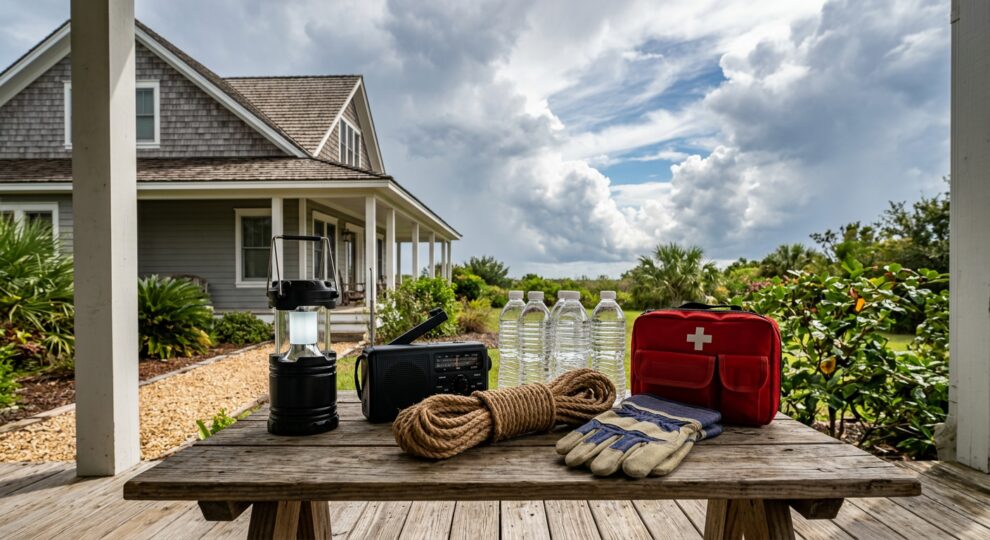
Hurricane Season Gear Guide: 10 Essentials That Earn Their Spot
Affiliate disclosure: This post contains affiliate links. We may earn a commission if you make a purchase through our links, at no extra cost to you.
Every June, official checklists tell millions of coastal residents to “assemble a hurricane kit,” and every August, the same people find themselves in a grocery store line at midnight with everyone else who waited. The difference between those two situations is not luck; it is having bought the right things once, early, so that storm week involves no shopping at all.
This guide skips the generic advice and goes straight to the gear that matters, category by category. Everything here is chosen for one test: does it earn its storage space for the other eleven months of the year? A good hurricane kit is mostly excellent everyday equipment.
The Quick Picks
| Category | What to Look For | Typical Price |
|---|---|---|
| Emergency radio | NOAA weather bands + hand crank or solar charging | $25-$60 |
| Emergency food bucket | Weeks of shelf-stable meals in one pail | $100-$250 |
| Flood barrier | Self-activating water-absorbing dams for doorways | $30-$130 |
| Water-powered sump backup | Runs with zero electricity, no batteries | ~$300 |
| LED lanterns | 360-degree room light, AA-powered or rechargeable | $15-$50 |
| Heavy tarp + sandbags | Roof patching and water diversion | $20-$60 |
| Product | Category | Price | Rating | Link |
|---|---|---|---|---|
| FosPower NOAA Emergency Weather Radio A1 | Weather radio | $30 | 4.6* | Check Price |
| Hand Crank Radio with LED Flashlight | Weather radio | $27 | 4.5* | Check Price |
| Quick Dam Water Activated 5ft Flood Barrier | Flood barrier | $33 | 4.4* | Check Price |
| Quick Dam Water Activated 10ft Flood Barrier | Flood barrier | $33 | 4.5* | Check Price |
| SumpJet Water Powered Backup Emergency Sump Pump | Sump backup | $312 | 4.6* | Check Price |
| Etekcity LED Camping Lanterns | Lighting | $23 | 4.7* | Check Price |
| Grizzly Tarps 10 x 14 Large Multi-Purpose Waterproof Heavy Duty Poly | Tarp | $23 | 4.5* | Check Price |
| ReadyWise Emergency Survival Food Supply Favorite Sample Bucket | Emergency kit | $144 | 4.5* | Check Price |
1. A Weather Radio That Works When Towers Do Not
Cell networks fail first and come back last during hurricanes. NOAA weather radio broadcasts continue through almost anything, and models with SAME technology can alert you to warnings for your specific county even overnight.
Look for: NOAA bands, hand crank or solar charging (so dead batteries never matter), a built-in flashlight and USB output for topping up a phone. The classic hand-crank units do all of this for about $30. Test it monthly; crank radios have small batteries that like being exercised.
2. A Pre-Assembled Kit You Never Have to Think About
Building a kit from scratch saves money but takes a dozen decisions. Pre-packed options handle the baseline instantly: full kits bundle food, water, first aid, and light, while food-focused buckets like the 120-serving ReadyWise in our table cover weeks of meals in one grab-and-go pail. Either way, treat the bucket as your floor and add the specialized items below on top, since few pre-packed kits cover home-specific needs like flood protection.
Check the calorie count per person per day (aim for 2,000+) and the shelf life (5 years is standard for ration bars). Store it where an evacuation grab is one motion: garage shelf, front closet, or under the bed in a bedroom near the exit.
3. Flood Protection for Doors and Garages
Most hurricane flooding enters homes low and fast: through doorways, garages, and ground-level openings. Modern self-activating flood barriers are polymer sacks that absorb water and expand into a dense dam as they get wet. Lay them flat before the storm along garage doors, exterior doors, and window wells; they need no electricity, no filling, and no heavy lifting.
For homes with recurring water issues, stackable plastic flood barriers or a simple sandbag-and-tarp combination at the garage threshold still outperforms doing nothing by a wide margin. Check your drainage paths too: downspout extensions pointed away from the house cost $10 and prevent more water intrusion than any single gadget.
4. Battery Backup for Your Sump Pump
Here is a fact that surprises people every season: the sump pump fails exactly when it is needed most, because pumps run on wall power and storms kill wall power. Our pick solves this elegantly: the SumpJet is a water-powered backup pump that needs no batteries and no electricity at all. It sits beside your main pump, connects to your cold-water line, and starts pumping automatically when water rises past its float, moving over 1,000 gallons per hour using only municipal water pressure.
If your basement has flooded once and you’re on city water, this is the highest-value purchase in this entire guide. Two caveats: it requires municipal water pressure (not an option for well-water homes), and it uses roughly 2 gallons of city water per gallon pumped, which is a trade worth making during a flood. On a slab or high ground, skip it guilt-free and put the money toward the generator fund.
5. Lighting That Lights Rooms, Not Just Tunnels
Hurricane nights are long and dark. One LED lantern per occupied room beats a drawer full of flashlights: 360-degree light lets families cook, play cards, read, and move safely. Add headlamps for anyone doing tasks (checking the breaker, walking outside). Rechargeable lanterns that double as power banks earn their spot twice over. Stock lithium AA and D cells; they outlast alkalines in humidity and store longer.
6. Water: Storage Plus a Backup Filter
Plan on one gallon per person per day, minimum three days, ideally seven for hurricanes (water service failures are common after major landfalls). Fill bathtubs before the storm arrives for sanitation water. Beyond stored jugs, a gravity-fed water filter or squeeze filter makes any questionable source safe to drink, which turns your water heater tank and toilet tanks (yes, really) into emergency reserves if needed.
7. Food That Eats Fine Without Cooking
After landfall, expect days without reliable cooking fuel. Stock what eats cold without complaint: canned beans and soups (heatable later), peanut butter, crackers, trail mix, protein bars, dried fruit, tuna pouches. Manual can opener, non-negotiable. If you already own a camping stove, great; just run it outdoors only, never inside.
8. Tarps, Rope, and Roof Patching
The most common hurricane repair is a compromised roof, and the difference between a $30 tarp applied day one and waiting for insurance contractors is measured in ruined drywall and mold. Buy one heavy-duty woven poly tarp larger than half your roof section, plus roofing nails with rubber washers, sandbags or furring strips for edge anchoring, and paracord. Practice unfolding and positioning it once so it is not foreign at 2 AM in the rain.
9. Power Banks and Charging
A 20,000mAh+ power bank charges a phone 3-4 times; one per adult is the right ratio. Solar panel accessories are nice-to-have but slow; the practical pattern is charging everything to 100% at the storm watch stage and rationing from there. Car charging covers the rest if roads are passable.
10. Documents, Cash, and the Boring Stuff
Waterproof document pouch with copies of insurance policies, IDs, deed/lease, medical prescriptions, and photos of valuables. $150-300 in small bills (card networks go down regionally after major storms). Pet food, baby supplies, prescription refills, and hygiene items round out the kit. These items cost almost nothing and cause outsized misery when missing.
Building Your Kit Without Blowing the Budget
If buying everything at once is too much, buy in this order:
- Water storage plus filter (~$50)
- Radio and lanterns (~$80)
- Food supply for 3 days (~$60)
- Power bank(s) (~$40)
- Pre-assembled kit as the backbone upgrade (~$150)
- Flood protection specific to your home (~$50-$300)
- Generator/power station fund (longer term)
FAQ
What should be in a basic hurricane kit?
At minimum: one gallon of water per person per day for three days, three days of non-perishable food, a battery or hand-crank NOAA weather radio, flashlights and extra batteries, a first aid kit, medications, copies of important documents, cash in small bills, and phone chargers or power banks.
How much water do I need for a hurricane?
One gallon per person per day, for drinking and sanitation. Plan for three days minimum, but seven is smarter for hurricanes specifically because municipal water failures after major landfalls regularly last a week or more.
Do flood barriers actually work?
Self-activating absorbent barriers work well against shallow water intrusion (an inch or two) through doorways and garage gaps, which describes most residential flooding. They are not a substitute for elevation or professional floodproofing in surge zones, but for rain-driven flooding they are cheap, effective insurance.
Is a water-powered backup sump pump worth it?
If you have a basement that has ever taken water and you’re on municipal water, yes: it keeps pumping during the power outage that floods basements, with no batteries to maintain. Expect to pay around $300 for a quality unit like the SumpJet. Well-water homes should look at battery or generator-powered backups instead.
When should I start preparing for hurricane season?
Before June 1, the official Atlantic season start. Supplies are fully stocked and calm-weather installation jobs (flood barriers, sump checks, tree trimming) are easy. By the time a named storm is in the forecast, lines are long and shelves are thin.
How many days of supplies do I really need?
FEMA recommends 72 hours as the floor. For hurricanes, plan for 7 days of essentials, because power restoration and water service after significant landfalls routinely take a week in affected areas.
Related Reading
- Flood Emergency Plan: How to Prepare and Stay Safe
- How to Purify Water During an Emergency Without Power
- Best Emergency Radios
- Home Emergency Kit Essentials
External Resources
The Bottom Line
Hurricane preparation is won months before the storm. Pick the categories above that match your actual risks (flood-prone? basement?), buy them once, and spend storm week calm instead of competing for the last case of water. Start with water and information (radio), add light and food, then handle home-specific protection like flood barriers or sump backups. That is a complete kit that earns its shelf space.