This post contains affiliate links. We may earn a commission if you make a purchase through our links at no extra cost to you.
Can your resolve survive when shelves empty and the unseen threat looms?
The Stockpile Mirror: What Drives the Urge to Hoard?
Ever wonder why certain aisles look like they’ve been hit by a hurricane whenever there’s a hint of trouble? I’m not talking about your everyday grocery run; it’s that frantic, gotta-grab-it-all frenzy that seems to grip everyone the moment a crisis looms. It’s more than just being prepared; it’s a deep-seated reaction to uncertainty, a primal urge to create a buffer against the unknown. So, what’s really going on in our heads when we transform into stockpile-seeking missiles? Let’s dive in.
Can your resolve survive when shelves empty and the unseen threat looms?
The Stockpile Mirror: What Drives the Urge to Hoard?
Why does every crisis turn ordinary people into frantic shoppers, emptying shelves like locusts in a field? It’s more than just needing supplies. It’s a raw, visceral reaction to fear. Panic sets in, and people crave control, even if it’s just the illusion of it. That mountain of canned goods? It’s a shield against the storm, or so they think.
Biases and Emotional Reasoning
Our brains are wired to take shortcuts. When uncertainty reigns, cognitive biases kick in. The availability heuristic, for example, makes us overestimate the likelihood of events we can easily recall. Media hyping shortages? Suddenly, you NEED that extra case of water. Emotional reasoning takes over: “I feel anxious, so the world must be ending! Must. Buy. All. The. Things.”
The Herd Mentality
Humans are social creatures, whether it’s the need to be on the right side of the numbers game with friends and family, or whether they are total strangers on the street scrambling for the same prize. When we see others rushing to grab something, a primal urge kicks in. Rational thought goes out the window, replaced by a desperate need to acquire, regardless of actual need. Did the market quiet when you approached? A quick pause lets your instincts process the vibe. That first glance is everything. Pause to assess.
What the Masses Grabbed: Lessons from the Last Crisis
The chaos of a crisis isn’t random. Look at what people fought over during the COVID-19 pandemic. Analyzing those choices reveals deep-seated fears and priorities. It’s a test in human nature’s habits and reactions to the unknown.
Toilet Paper, Canned Goods, Rice: More Than Just the Basics
Toilet paper. Absurd? Maybe. But it represents comfort, control, and a return to normalcy. Canned goods and rice speak to a need for sustained sustenance, a belief that the crisis will drag on. These aren’t just groceries; they’re psychological anchors in a sea of uncertainty.
Weapons and Precious Metals: Preparing for Societal Breakdown
Then there were those who anticipated societal collapse. Weapons for security. Precious metals as a hedge against economic ruin. These weren’t just consumer goods; they were preparations for a different world, where the old rules no longer applied. Every ruined town has an unspoken structure, and knowing the rules of the game before the masses is critical.
The Foundation of Fortitude: Your Personalized Supply List
Forget blindly following the crowd. A true stockpile strategy is tailored to your needs, your location, and your level of preparedness. It’s about more than just quantity; it’s about quality, durability, and strategic resource management. Scan the terrain.
Water: Calculating Needs and Effective Storage Methods
Water is life. A stackable 55-gallon water storage tank is a solid start; calculate at least one gallon per person per day, more if you live in a hot climate or have specific health needs. Store in food-grade containers, away from sunlight and heat. Consider water purification methods as a backup; boiling, filtration, and chemical treatments should all be practiced skills.
Non-Perishable Food: Calorie-Dense Options and Extending Shelf Life
Think beyond basic canned goods. Emergency food buckets and calorie-dense options like nuts, seeds, dried fruits, and protein bars. Learn to preserve food through canning, dehydrating, and curing. Understand expiration dates; many foods are safe to eat long after the printed date, especially if properly stored.
First Aid and Sanitation: Staying Healthy When Medical Infrastructures Buckle
A comprehensive first-aid kit is essential, but knowledge is even more valuable. Take a wilderness first-aid course. Stock up on antibiotics, pain relievers, and hygiene products. Learn about sanitation practices to prevent the spread of disease when clean water is scarce. Understand infection control. If preparing for a health emergency is a concern, see this how to prepare for a health crisis guide.
Adapting the List: Individual Needs, Infants, Prescriptions
Your stockpile must reflect your specific circumstances. Infants need formula and diapers. People with chronic illnesses need prescription medications. Consider dietary restrictions, allergies, and cultural preferences. A generic stockpile is a flawed stockpile.
The Unseen Enemy: Psychological Resilience
A well-stocked pantry is useless without a strong mind. In a long-term crisis, mental fortitude is your most valuable asset.
Managing Anxiety and Uncertainty: Practical Tools to Stay Grounded
Anxiety is the enemy. Develop coping mechanisms. Practice mindfulness, meditation, or deep breathing exercises. Establish routines to maintain a sense of normalcy. Limit exposure to fear-mongering media. A quick pause lets your instincts process the vibe. That first glance is everything.
Building Community Support: The Importance of Collaboration, Skill Mapping
Lone wolves don’t survive. Build a network of trusted individuals. Share resources, skills, and knowledge. Identify each person’s strengths and weaknesses. Learn how to delegate tasks and work as a team. The flow of a crowd is like a river, follow its direction to see where those around you have strengths.
Maintaining Morale: Activities, Routines, and Strategies to Remain Focused
Boredom and despair are killers. Plan activities to alleviate stress and maintain morale. Read books, play games, tell stories. Celebrate small victories. Remember what you’re fighting for.
The Rippling Effect: stockpiling and the Fragile Economy
Your actions have consequences. Understand how stockpiling and panic buying affect the broader economy.
Increased Demand, Empty Shelves: Government Intervention and Its Effectiveness
When demand surges, prices skyrocket and shelves empty. Governments may intervene with price controls or rationing. Study the effects of these policies, both intended and unintended. Be prepared for potential shortages and restrictions.
Long-Term Economic Strategies During a Pandemic: Price Controls
Price controls can lead to black markets and hoarding. Rationing can create resentment and inequity. Understand the potential consequences of these policies and adapt your strategies accordingly. Turn adversity into opportunity.
Turn the Tide: Building a Sustainable stockpile
Start with an assessment of your current supplies. What do you already have? What do you need? What are your priorities? Be honest with yourself. Don’t overbuy unnecessary items while neglecting essentials. To start, see this emergency preparedness guide.
Storage Solutions: Maximizing Space While Protecting from the Elements
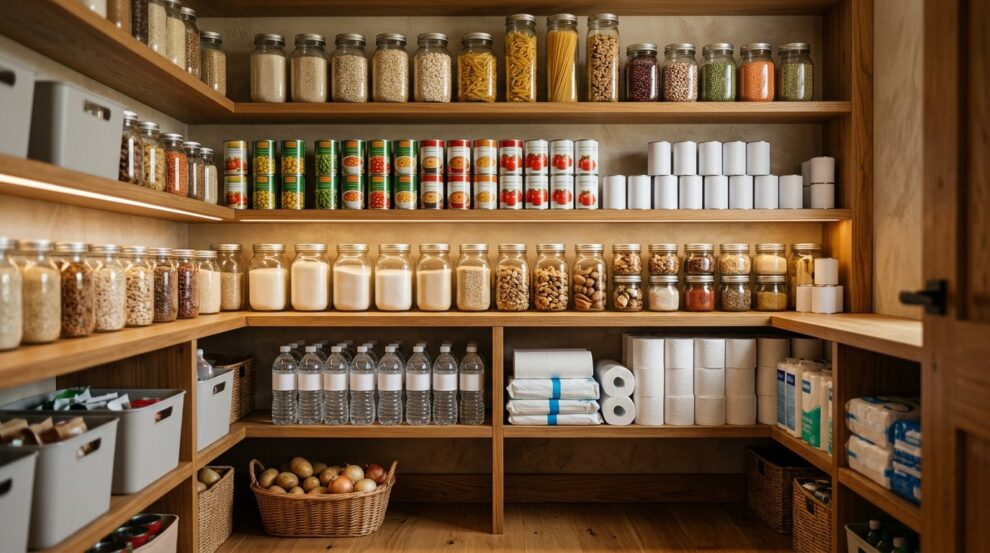
Efficient storage is crucial. Utilize vertical space with shelves or racks. Store items in airtight containers to protect them from moisture, pests, and temperature fluctuations. Organize your stockpile logically, so you can quickly find what you need.
Rotation Strategies: Managing Inventory to Prevent Waste
Implement a First In, First Out (FIFO) system. Rotate your stockpile regularly, using older items before newer ones. Monitor expiration dates and consume items before they expire. Use leftovers creatively to minimize waste. Learn foraging as a secondary trade for when the lights go out. This trade opens doors when other skills can get you only so far. Sticking to a budget? Here’s emergency preparedness on a budget.
The Prepared Mind Sees Opportunity
In chaos, the prepared mind sees opportunity. Hone your observation skills, learn to interpret subtle cues, and exploit advantages that others miss.
Peripheral Vision: What Others Miss, You Must See
Develop situational awareness. Constantly scan your surroundings. Pay attention to details that others overlook. Notice changes in behavior, subtle movements, and potential threats. That first glance is everything.
Gatekeepers: Know the Players That Can Impact Your Ability to Survive
Identify individuals or groups who control access to resources, information, or power. Understand their motivations and vulnerabilities. Develop relationships with them, or find ways to circumvent them. Every ruined town has an unspoken structure, and knowing the rules of the game before the masses is critical. Building a home emergency kit is crucial.
Final Thoughts: The Crucible of Preparation
The essence of readiness lies not just in overflowing larders, though, but in a resilient spirit and a sharp eye. It’s about understanding the game, reading the subtle tells, and anticipating the next move, whether it’s a sudden market correction or a neighborhood in need. Embrace the challenge, hone your skills, and fortify your mind, for you can’t prepare during a panic. You must prepare well in advance.