Affiliate disclosure: This post contains affiliate links. We may earn a commission if you make a purchase through our links, at no extra cost to you.
If you want to know how to protect your home from wildfires, start with embers, not flames. Most houses that burn are not overrun by a wall of fire. They are lit by small burning pieces that ride the wind a mile or more ahead of the main fire and land in gutters, under decks, on porches, and against siding. That is why one house survives a fire front while the one next door does not.
The work that protects a home is unglamorous and mostly free: clearing space around the structure, closing up the gaps embers sneak through, and knowing exactly what your family will do when smoke shows up. This guide walks through it zone by zone, then covers the upgrades that matter most and the evacuation habits that keep everyone calm. FEMA’s wildfire guidance on ready.gov pairs well with everything below.
How to Protect Your Home from Wildfires: The Short Answer
Protect your home from wildfire by creating defensible space within 100 feet of the structure and hardening the house itself against embers. Keep the first 5 feet around your walls free of anything that can burn. Keep the 5 to 30 foot band lean, green, and well spaced so a ground fire stays low and slow. Thin the 30 to 100 foot band so incoming fire loses fuel as it approaches. Screen your vents with metal mesh, keep the roof and gutters clear, and have an evacuation plan your family has actually practiced.
No single project fireproofs a house, and nobody should pretend otherwise. The layered work is what tips the odds, and every layer is something a household can do without hiring anyone.
| Product | Best For | Why It Earns a Spot |
|---|---|---|
| N95 respirator masks | Smoke days and evacuation drives | Filters the fine particles that make wildfire smoke hazardous. Keep a fresh pack for each adult. |
| Fire blanket | Small ember ignitions | Smothers a smoldering doormat or porch cushion in seconds, with no mess. |
| Heavy duty tarp | Post fire patching | Covers a broken window or roof section until repairs happen, which matters when rain follows a fire. |
Zone 0: The First Five Feet
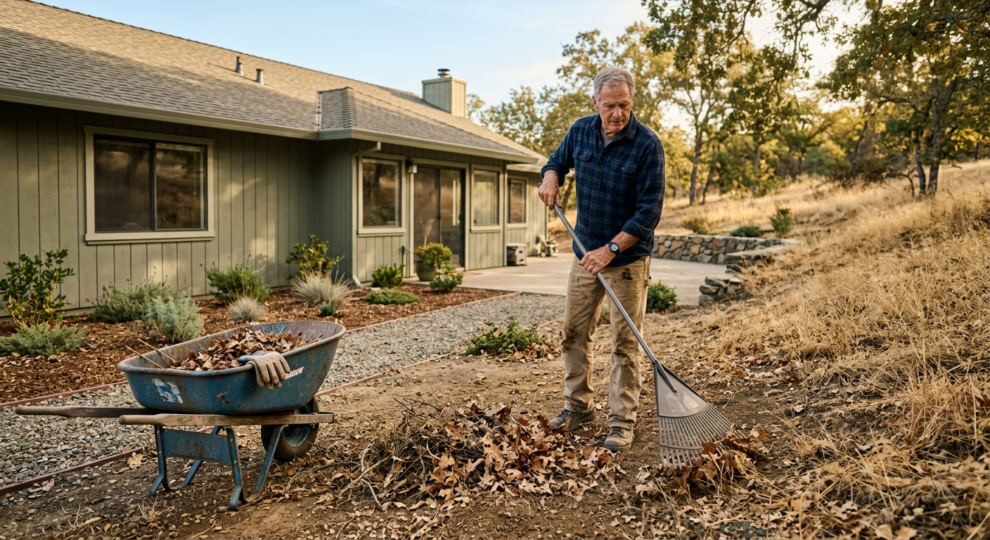
The five feet closest to your walls decide whether a wind blown ember finds tinder or nothing at all. Fire agencies, including the National Park Service’s fire program, tell homeowners to keep this strip free of anything that burns, because an ember landing here is an ember one gust away from your siding.
- Replace bark or rubber mulch within 5 feet with gravel, stone, pavers, or bare raked soil.
- Move firewood, propane tanks, gas cans, paint, and stored clutter out of this zone, ideally into the garage.
- Sweep leaves and needles off the roof, out of gutters, and away from the foundation weekly during fire season.
- Clear everything flammable out from under decks and porches, including stored furniture.
- Park boats, RVs, and trailers at least 30 feet away, or inside.
- If you want plants here, keep them low, watered, and non-woody.
Recheck this zone weekly through fire season. Wind collects debris against walls and fences faster than most people expect.
Zone 1: 5 to 30 Feet: Lean, Clean, and Green
This band decides whether a fire stays a slow, low ground fire or climbs into your trees and roof. The goal is simple: nothing dead, nothing touching the house, and plants spaced so flames cannot ladder from shrubs into tree crowns.
- Mow dry grass and weeds to 4 inches or less.
- Remove dead plants, fallen leaves, and dead branches as they appear, not once a year.
- Space shrubs apart, and give tree canopies about 10 feet of separation, more on slopes.
- Prune lower branches up to roughly 6 feet from the ground.
- Keep a watered strip of lawn or low planting closest to the house.
- Store firewood at least 30 feet from the house. Stacked wood against the wall is one of the most common and most fixable mistakes we see.
A few irrigated shrubs here are fine. A dense, dry hedge pressed against your siding is the opposite of fine.
Zone 2: 30 to 100 Feet: Slow the Fire Down
Farther out, the job is to make incoming fire shorter, cooler, and slower by breaking up fuel. You are not trying to strip the land bare, and you should not: bare dirt erodes, and mature trees shade your house and hold your soil. You are building interruptions.
- Thin trees so crowns have gaps between them instead of forming a continuous canopy.
- Remove small trees and shrubs growing under mature trees, which act as ladders for flame.
- Move brush piles and dry yard debris well away from structures, and chip or haul them when you can.
- Keep driveways and access lanes trimmed on both sides. They double as fuel breaks and escape routes.
If your lot ends at 60 feet, treat every foot you own and talk with your neighbors about the rest, because fire does not stop at fence lines. Many neighborhoods organize through the Firewise USA program, which helps when you would rather not be the only one on the street doing this work.
Home Hardening: Vents, Gutters, Roofs, and Decks
Defensible space handles embers landing outside. Hardening handles the ones that get close. During a wildfire, embers can rain on a neighborhood for an hour or more, probing for the weakest opening in every house on the block.
Vents and gaps
Any vent, dryer exhaust, crawl space opening, or gap in siding is an open door for an ember. Cover all vents with metal mesh no larger than 1/8 inch; plastic screens melt, and 1/4 inch mesh lets embers through. While you are at it, check the weatherstripping along your garage door, because embers push under that gap in a stiff wind.
Gutters and roof
A gutter full of dry needles is a fuse aimed at your eaves. Clean gutters at the start of fire season and again midway if trees overhang the house. Metal gutter covers help keep them clear between cleanings. When the roof is due for replacement, choose a Class A fire rated material, and repair missing or curled shingles promptly in the meantime. Add a spark arrestor to the chimney if it lacks one.
Decks and attachments
Embers collect in the gaps between deck boards and under the deck itself. Sweep debris out regularly and keep nothing flammable stored underneath. When fire weather is forecast, move cushions, furniture, and grill propane away from the deck.
For the small ignitions that can start while you are home and it is still safe to act, like an ember smoldering on a doormat or a corner of a cushion, a fire blanket smothers flames in seconds by cutting off oxygen. Be honest about its limits: it is for flare-ups the size of a throw pillow, and it is never a reason to stay in a house that has been told to evacuate.
Evacuation Readiness: Packed Before the Smoke
Houses can be rebuilt. Your evacuation plan is what protects the people inside one. Wildfire evacuations often come with less warning than families expect, and the households that leave calmly are the ones that did the thinking in advance.
- Sign up for your county’s emergency alert system and keep Wireless Emergency Alerts enabled on every phone.
- Pack go-bags for each person. Our bug out bag gear list covers what goes in them, and a home emergency kit covers what the house needs if you stay put through a smoke event.
- Agree on an out-of-area contact and two meeting points. Our emergency evacuation plan field guide walks through the details.
- Plan for pets: carriers, leashes, food, and where they are actually allowed to go.
- Keep the gas tank above half during fire season and park facing your escape direction.
- Film a slow walkthrough of every room and closet once a year and store it in the cloud for insurance.
Then practice the exit. Load the car, grab the bags, and drive your routes at least once. Aim to be rolling within ten minutes of an evacuation order, which only happens when nobody is still deciding what to pack.
What to Do When a Wildfire Is Near
When a fire is in your area, your job shifts from home defense to people safety. Track official sources: county alerts, local emergency management, and your state fire agency. Social media rumors run worse than the real situation in both directions, so stick to sources that name streets.
- Leave early if you feel unsafe. You do not need permission to protect your family, and roads clog quickly.
- If an order comes, go immediately. Take your go-bags, wear long sleeves and closed shoes, and hand N95 respirator masks to anyone bothered by smoke in the car. They filter the fine particles in smoke, though not gases, and they are not a reason to linger.
- Close every window and door, including interior ones, and leave them on the latch so firefighters can move through quickly.
- Turn on porch lights and interior lights so the house stays visible through smoke.
- Leave garden hoses connected and visible for crews who may use them.
- Move patio furniture, cushions, and doormats away from the house if time allows, then leave.
If you are ever trapped with no route out, call 911, stay away from outside walls, and wait for rescue. Families who plan ahead almost never end up in that position, which is the point of everything above.
After the Fire: Coming Home Safely
Return only when officials reopen your area. Smoldering roots, weakened trees, and damaged power poles stay dangerous long after the visible flames are gone.
Walk the property slowly and check the usual ember traps: gutters, the roof, vents, under decks, and crawl spaces. Douse anything hot. Photograph all damage before you clean or repair anything, because your insurance claim will rest on that documentation. If a window or a section of roofing is gone, a heavy duty tarp makes a fast, weather tight patch until repairs happen. Then restock whatever you used from your supplies, so the kit is whole before the next red flag warning.
How to Protect Your Home from Wildfires: FAQ
How much defensible space do I need?
Work toward 100 feet, or to your property line if the lot is smaller. The first 5 feet matter most, followed by the 5 to 30 foot band, because that is where embers find the fuel that actually ignites houses. Start there even if the outer zones take all season.
Where should I start if I only have one weekend?
Clean the roof and gutters, clear the first 5 feet down to gravel or bare soil, move firewood and propane away from the house, and screen your vents with 1/8 inch metal mesh. Those four jobs cover the majority of how homes actually ignite. Everything else can follow week by week.
Do N95 masks really help with wildfire smoke?
Yes, for the fine particles that make smoke hazardous, which is exactly what an N95 is designed to filter. They do not filter gases, and fit matters, so press the nose piece and check for leaks around the edges. Keep a fresh pack with your evacuation supplies, since smoke often lingers for days after a fire passes.
Is a home with wooden siding or a shake roof a lost cause?
No. Defensible space is the bigger lever by far, and a wooden house with 100 feet of lean, green space and screened vents is far safer than a stucco house buried in dry brush. When the roof reaches the end of its life, upgrade to a Class A rating. Until then, do the zone work.
Should I wet down my roof before evacuating?
Skip it. Sprinklers and hoses rarely slow a wildfire enough to matter, and the minutes spent watering are minutes you need for leaving safely. Close the house up, leave the lights on, and go. Water pressure is better saved for the crews who may need that hydrant.