This post contains affiliate links. We may earn a commission if you make a purchase through our links at no extra cost to you.
I’ve always been one to prepare for the unexpected. You never know when a curveball will come your way whether it’s a job loss, an ice storm, or an invisible germ changing the world as we know it. During times of crisis, there are runs on everything! We saw it, didn’t we? Toilet paper, water, and hand sanitizer disappeared as quickly as snow in July. So what do you do when you can’t find the basics? You adapt, improvise, and overcome. Let’s specifically look at how to prepare when something as simple as keeping your hands clean becomes a challenge, and how you can ensure you and your family are safe even when the store shelves are empty.
Can You Sanitize Survival?
Riding Out the Shortage
Are you prepared to see bare shelves where hand sanitizer once sat? When order erodes and supply chains buckle, resourcefulness is your most vital asset. DIY sanitizer becomes not just a project but a critical lifeline. During emergencies (when commercial options vanish like water in the desert) creating your own hand sanitizer becomes essential; it’s self-reliance distilled. Start now by stocking up on the necessary ingredients, so you can craft your own solution at a moment’s notice.
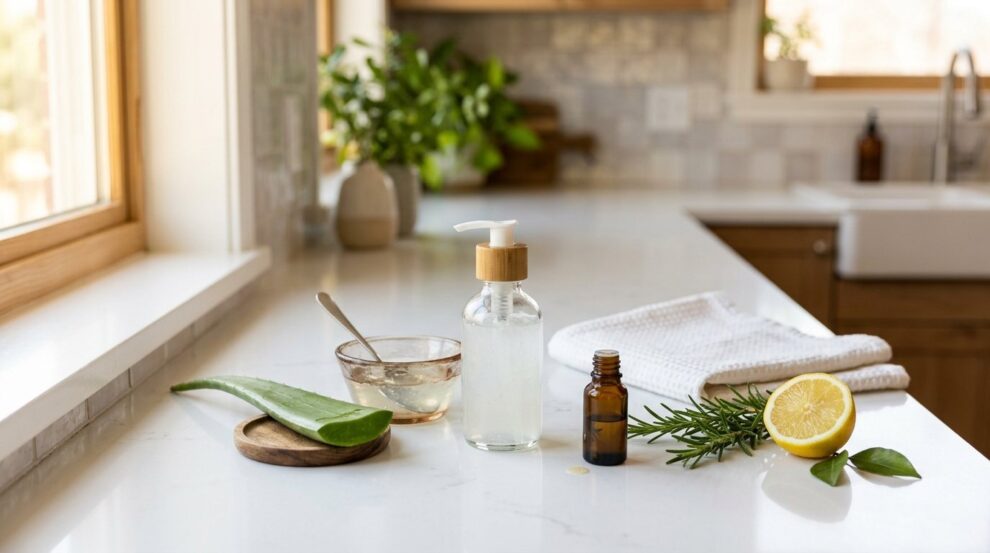
Here’s what you need to squirrel away: high-proof alcohol, aloe vera, and essential oils. Master this formula, and you’re one step ahead. Remember this: though DIY sanitizers are useful, they’re second to the power of soap and water, especially if your hands are visibly dirty. Hygiene remains the cornerstone of survival. Consider the benefits of making soap.
The Alchemist’s Toolkit: Ingredients Laid Bare
To begin, the core element: Alcohol. Do not waver! You need high concentration alcohol. Look for at least 60%, but aim higher. Think 91% isopropyl alcohol as your base line. Settle for less, and you’re wasting precious resources. Why? Because anything lower will simply not have the strength to do the job. That first glance is everything so do not get duped!
Next, you need aloe vera, the oasis for your skin. The high alcohol content dries skin which causes cracking, leaving you open to invaders. Aloe is the countermeasure, keeping your skin alive and less vulnerable. It reduces the harshness of alcohol so your skin doesn’t turn to the desert.
Scent is power. Don’t underestimate the psychological edge of a pleasant-smelling sanitizer. Essential oils such as lavender or lemon are more than luxury; they make your hand sanitizer worth using. In grim settings, a little comfort goes a long way. Also, you can’t have people thinking you are hiding something or that you are using a poison.
Consider other players like witch hazel. In a pinch, witch hazel can extend your alcohol supply especially when resources diminish. Just know witch hazel will lower the alcohol concentration. If you add witch hazel, add it sparingly to avoid weakening the sanitizer. Be sure to check out our emergency preparedness guide for more ideas!
Brewing the Potion: The Hand Sanitizer Recipe
Now, the moment of truth: crafting the solution. It comes down to ratio warfare: the ideal alcohol to aloe vera balance. Don’t get fancy or experimental. The priority is protection. Going too low on alcohol is useless. As a starting point, target a 2:1 ratio of alcohol to aloe vera. If you use witch hazel, adjust and add to the aloe vera for more balance.
The mixing process matters now. This isn’t just stirring; it’s about ensuring that every drop is potent. Use a clean container, preferably glass (these amber glass spray bottles work well), and mix deliberately. Homogenization saves lives because a thoroughly mixed concoction does its job.
Consider bottling strategies that prioritize security. Reuse travel bottles, small glass jars, and other discreet containers. Maintain supply and carefully consider how to parcel the sanitizer within small networks or family. Remember, when water supplies are low, you still must use some to clean them. This is a high-value item, so treat it and ration it accordingly. Think ahead about how to prepare for a health crisis.
Sanitizer like a Surgeon:
Mistaken identity can have dangerous consequences. Do not mix them up. Redundancy is key for survival. If one stash is compromised, others remain.
Safety First: Don’t Become the Experiment
Strength matters more than volume. Using too little alcohol in hopes of saving some might leave you exposed. More isn’t always better. Accuracy is everything and becomes even more critical. Eyeballing it is gambling with your health, and in a crisis, you can’t afford to lose.
Skin watch: During times of stress or exposure, cracking opens doors for other problems. Keep a keen eye on your skin. Why? Because even tiny fissures can invite infection. Keep that aloe vera to mitigate any potential issues. Importance of first aid is equally as important.
Know your limits when discussing commercial versus DIY. Understand that DIY might not be as effective against all pathogens. It’s better than nothing, but don’t assume it’s a perfect shield.
DIY Versus the Store: The Cold Truth
Remember, commercial strengths are regulated while DIY strength is not. The absence of regulation brings both opportunity and danger. You have freedom to adapt but also the responsibility to ensure efficacy. If you decide to adapt, do so with caution. Do not become the testing dummy.
Always check expiration dates. Even on over-the-counter sanitizers, the active ingredients degrade over time which reduces their effectiveness. Also check if the seal is still intact when scavenging in abandoned houses.
Think long term as stabilizers are everything. Consider adding a stabilizer like vitamin E oil to extend your sanitizer’s shelf life.
Finally, cost analysis. Is home-made worth the squeeze? Run the numbers: If store-bought sanitizer is available (and affordable), it might be the smarter choice. But when society frays, your DIY skills become priceless- weigh the factors and decide.
The Final Wash
All in all, learning to produce a DIY sanitizer offers the assurance of self-reliance in unstable days, whether it’s shortages or gridlock. You can adjust to what’s available and protect yourself. By knowing the formula, understanding the components, and prioritizing safety, you’re not just mixing chemicals; you’re securing a piece of mind. Hone your understanding now, and then during the unexpected, you’ll be ready.