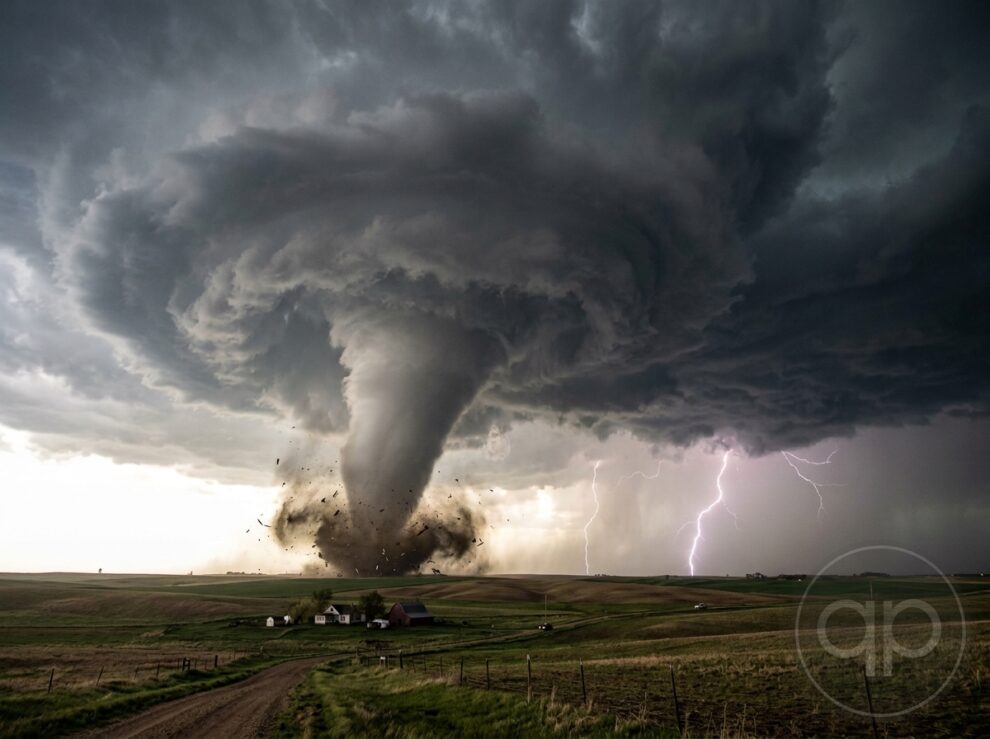
I’ve always been a weather watcher, even as a kid. I grew up in tornado alley, where the sky could turn from clear blue to angry green in minutes. Over the years, I’ve learned that surviving a tornado isn’t about luck; it’s about knowledge, preparation and decisive action. There is no complex, expert skill required; a clear head and solid plan are your best tools. This isn’t just about reading weather reports, it’s about understanding the enemy, fortifying your defenses, and knowing when to run. It’s about taking control when nature tries to take everything else.
Understand the Enemy: Deciphering Tornado Behavior
The Anatomy of a Whirlwind
To outlast the chaos, you must first understand it. Start by learning the anatomy of a tornado, from its volatile birth to its destructive peak and eventual decay. Understand how warm, moist air collides with cold, dry air, creating the instability needed to form a supercell thunderstorm. Know the role of wind shear and the mesocyclone in spawning a funnel cloud.
Decoding Tornado Types and Paths
Each type of tornado carries its own signature. Familiarize yourself with the classifications, understanding which conditions favor EF0s versus EF5s, and their common paths, whether it’s a narrow track or a mile-wide swath of destruction. This awareness translates directly into predictive advantage, a vital edge when seconds count.
Busting Myths that can Kill
Myths are rampant, and blindly following them is a death sentence. The misguided belief that opening windows equalizes pressure? Debunked. Hiding under an overpass? A wind tunnel. Challenge every assumption. Your best defense is accurate knowledge, not unfounded assurances.
Eyes Wide Open: Pre-Tornado Surveillance
Tech Meets Instinct: The Ultimate Monitoring System
Don’t rely solely on technology, but use it to your advantage. Set up a weather monitoring system(NOAA alerts are base level. Augment it with your senses: the way animals behave, the pressure in the air, the change in scent. Pay special attention to the anomalies. That first glance is everything.
Reading the Precursor Signs
Before the storm hits, nature broadcasts warnings. Learn to read them. Pay attention to sudden stilling winds, an eerie green or yellow tinge to the sky, large hail without rain. Each of these signs is a cue, signaling heightened risk.
The Power of Shared Vigilance
No one survives alone. Establish a network of trusted neighbors. Share weather information, cross-validate observations, and create a community early warning system. Mutual support amplifies awareness and response capabilities significantly.
Fortify Your Fortress: Hardening Your Home Against Nature’s Fury
Sanctuary Secured: Choosing and Reinforcing Your Safe Room
Your castle is your sanctuary, but it needs a strong room. Whether it’s an interior room on the lowest level or a purpose-built shelter, ensure it can withstand extreme forces. Reinforce walls with plywood, consider a steel door, and secure it against debris intrusion. Fortification is insurance.
Mastering Utility Control
In the aftermath, uncontrolled utilities can turn a disaster into a catastrophe. Learn emergency shut-off procedures for gas, water, and electricity. Keep the necessary tools readily accessible and practice the process until it becomes muscle memory. Control reduces chaos.
Stockpiling for Survival
Your safe room is useless without provisions. Stock it with non-perishable foods, water (at least one gallon per person per day), a comprehensive first-aid kit, and communication tools like a hand-crank radio. Don’t forget comfort items, a blanket, a book, to ease the psychological strain. Preparedness is key. Consider building a home emergency kit.
The Art of Evasion: Strategic Retreat Planning
Layers of Escape: Tailoring Your Response
Every situation is unique, and so should be your evacuation plan. Develop layered strategies that account for different variables: the tornado’s intensity, your location, available resources. Know when to shelter in place and when to abandon your house entirely. Adaptability equals survivability.
Mapping Your Escape
Chart primary and alternate escape routes to both community shelters and geographically safer zones. Avoid predictable routes that could become gridlocked. Understand the terrain, identify choke points, and have a backup plan for every contingency. Every ruined town has an unspoken structure, so knowing your evacuation points could be your life saver.
Gear Up, Move Out
When bugging out, gear is everything. Assemble a go-bag with rugged clothing, protective gear (helmets, goggles), and mobility aids (sturdy boots, walking sticks). Include navigation tools like a map and compass. Prioritize essentials that enhance your speed, protection, and self-sufficiency. Speed matters.
Rehearse for Reality
Planning is useless without practice. Conduct regular family drills, rotating through different scenarios: daytime, nighttime, with minimal warning. Simulate the stress of an actual event. Identify weaknesses in your plan and refine accordingly. Repetition breeds competence. Review your family emergency plan.
Decisive Action: Surviving the Immediate Threat
Time is Life: Reacting with Unwavering Speed
When the warning sirens blare, hesitation is a luxury you can’t afford. Response time directly impacts survival odds. Know the moment to act. Trust your instincts, trust your training, and move with purpose and urgency. Hesitation is an invitation to disaster.
Protocol Under Pressure: Protecting Your Body
Inside your safe room, assume a protective position: crouch low to the ground, cover your head with your arms, and protect your vital organs. Use blankets, mattresses, or any available padding to shield yourself from flying debris. Cover equals defense.
Prioritize Survival: Possessions are Expendable
In the face of immediate danger, forget about your possessions. Your life and the lives of your loved ones are paramount. Don’t risk everything for sentimental items or material goods. Focus on surviving. Life trumps things.
What to do when there is no Safe Shelter (Mobile Home, Outdoors)
If caught outdoors or in a mobile home during a tornado, your approach to survival must be immediate and decisive. Immediately seek the lowest ground possible, preferably a ditch or ravine. Lie flat, face-down, and protect your head and neck with your arms. Distance yourself as much as possible from vehicles or mobile homes, which offer minimal protection and can become projectiles. If there are sturdy buildings in immediate proximity, seek shelter in the innermost room on the lowest level possible.
Communication Under Fire: Maintaining Contact When Disaster Strikes
Beyond the Grid: Backup Communication Systems
When the power grid fails, your smartphone becomes useless. Establish backup communication systems: hand-crank radios, satellite phones, or citizen band (CB) radios. Learn to use these tools and keep them charged and ready. Connectivity is a lifeline.
The Out-of-State Anchor
Designate an out-of-state emergency contact person. This individual should be someone familiar with your family and situation but unaffected by the disaster. Establish a communication protocol: a predetermined check-in time, a designated meeting point, and a shared understanding of your plans. Distance provides perspective.
Power Discipline: Conserving Battery Life
Battery life becomes a precious commodity in a crisis. Preserve it by enabling energy-saving modes on essential devices. Minimize non-essential usage, turn off unnecessary features, and keep spare batteries or a solar charger on hand. Every percentage point counts.
The Aftermath: Tactical Recovery and Reassessment
Navigating the Rubble
After the storm passes, exercise extreme caution. Follow emergency directives and be wary of hazards: downed power lines, structural instability, and hidden debris. Wear protective gear, sturdy boots, gloves, and a mask, to minimize injury. Safety first, assess after.
Document and Declare
Conduct a thorough damage assessment. Document everything: structural damage, lost possessions, and injuries. Take photos and videos. Report your findings to the necessary authorities: insurance companies, local emergency management agencies, and relief organizations. Documentation is crucial for recovery.
Community is Key
The road to recovery is long and arduous. Support community recovery efforts by volunteering your skills and sharing available resources. Help clear debris, distribute supplies, and provide emotional support to your neighbors. A united front strengthens everyone. Check out this civilian defense guide.
Psychological Resilience: Maintaining Resolve Amidst Adversity
Coping Under Pressure
Disasters inflict psychological wounds. Create coping mechanisms to mitigate disaster-related stress: mindfulness exercises, physical activity, creative outlets. Lean on your support network and practice self-care. Mind over matter is key.
Open Channels
Facilitate open dialogues within your family and community. Encourage people to share their experiences, fears, and grief. Normalize the emotional impact of the disaster and create a safe space for healing. Communication fosters resilience.
Seeking External Support
Don’t hesitate to seek professional assistance. Mental health support is essential for processing trauma, managing anxiety, and preventing long-term psychological damage. Many organizations offer free or low-cost counseling services to disaster survivors. There is strength in seeking help.
Lessons Learned: Adapting for Future Threats
Post-Mortem Analysis
Evaluate your preparedness strategy. Identify weaknesses, gaps, and areas for improvement. Be honest and objective in your assessment. Use the experience as a learning opportunity. Honesty is the basis of growth.
Continuous Refinement
Enhance community networks and update your skills through continuous learning. Take refresher courses in first aid, emergency communication, and survival skills. Stay informed about emerging threats and best practices. Adaptability is a perpetual edge.
Advocate and Innovate
Advocate for improved community safety standards and infrastructural resilience. Push for stronger building codes, better warning systems, and more robust emergency response planning. Share your experiences and insights with policymakers and community leaders. Progress demands action. For a more comprehensive look, reference this emergency preparedness guide.
The Final Word
The path to prevailing against a tornado strike is multifaceted. It encompasses knowledge, preparation, action, and resilience. From understanding the enemy, which is the tornado itself, to building a team that provides constant feedback, you must be ever vigilant. The key is not to fear the storm but to respect it and prepare relentlessly.
Now, it’s up to you to internalize these lessons. Review your plans, fortify your defenses, and strengthen your resolve. Because you can’t survive by simply hoping; you must *prepare* to prevail.